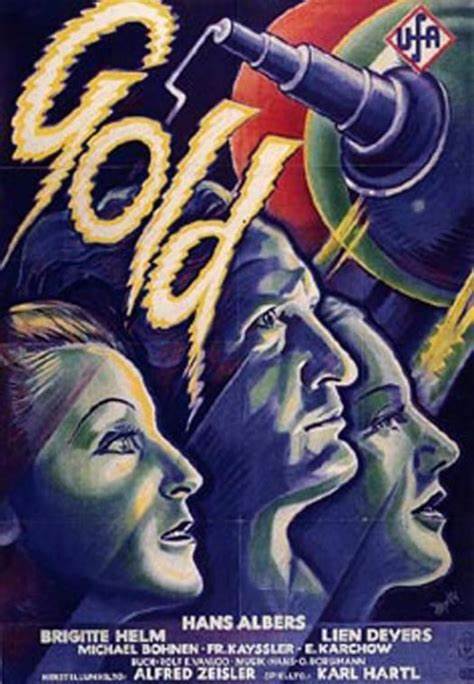
Gold is a German science-fiction drama directed by Karl Hartl.
The story follows a multinational team of scientists and financiers who develop a revolutionary process to transmute base metals into gold using a secret chemical method. Initial euphoria follows as the world’s economies and markets are transformed by virtually limitless new wealth.
However, the discovery’s social and political consequences quickly turn catastrophic: inflation, market collapse, crime, and global instability ensue as governments and interest groups scramble to control or suppress the process.
Key Themes
Invention: A scientist perfects a chemical technique to produce gold from ordinary materials.

Commercialization: Investors scale the process into industrial production, promising vast riches.

Collapse: The sudden flood of gold destroys monetary systems; economies and social order begin to unravel.

Conflict: Rival powers, corporate interests, and governments vie for control; sabotage and violence escalate.

Resolution: The film ends on a cautionary note about the dangers of unchecked technological power and the irresponsible pursuit of wealth (the narrative frames the invention as ultimately destructive).
Technology vs. society: innovation without ethical restraint leads to disaster. Economic critique: commentary on monetary systems, speculation, and the fragility of markets. Moral warning: greed and political manipulation corrupt scientific progress.
Tone and Style
Prophetic, dramatic, with expressionist visual touches typical of early 1930s German cinema. Combines science-fiction premise with political‑economic allegory; paced as a moral parable rather than action spectacle.
Bitchute Link